
NEWS
15/09/2026, 00:55
Academic Background
The following tracker data analysis (Part One) was conducted by a marine ecologist and researcher specialising in marine megafauna, with a particular focus on humpback whales. His academic posts and credentials include Griffith University in Australia. His research focuses particularly on climate change, migratory movements and habitat use, as well as the impact of human activity on the behaviour and conservation of whales and dolphins.
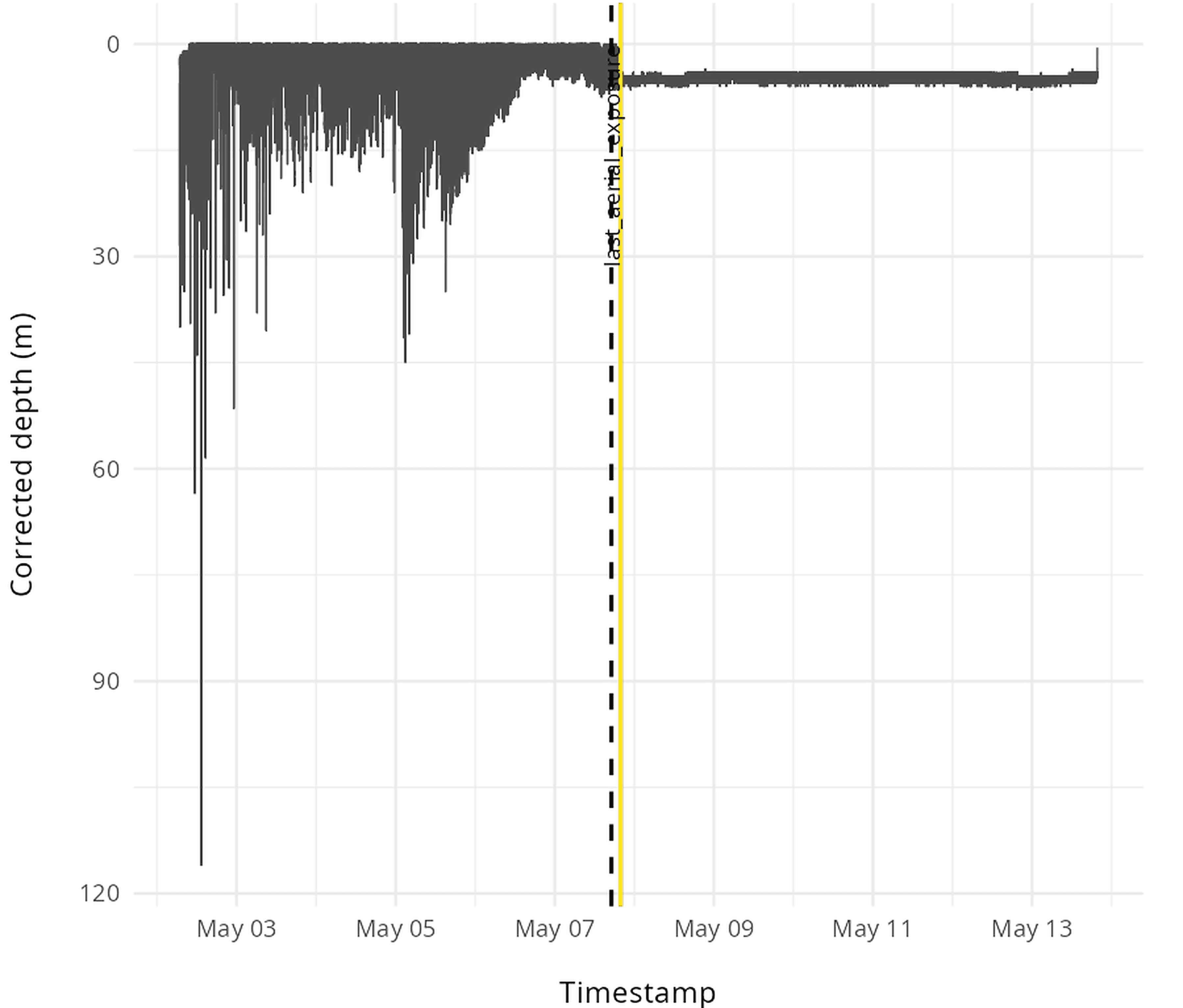
Chronological progression of the diving profile of the humpback whale Timmy/Hope with decreasing diving depth and shortened diving intervals from 6 May 2026 onwards
Up until 5 May, the recorded dive profile of the humpback whale Timmy/Hope shows pronounced variability with repeated dives of varying depths. The deepest dive identifiable in the available data is approximately 120 metres; a dive depth of 150 metres could not be confirmed. From 6 May, a decrease in dive depth and a shortening of dive intervals are documented. The last surface exposure was registered on 7 May. Subsequently, the recorded depth profile transitions into an almost constant near-surface trajectory.
During the course of 7 May, the last surface exposure of the transmitter was registered. From 8 May at the latest, no further corresponding transmission events were recorded.
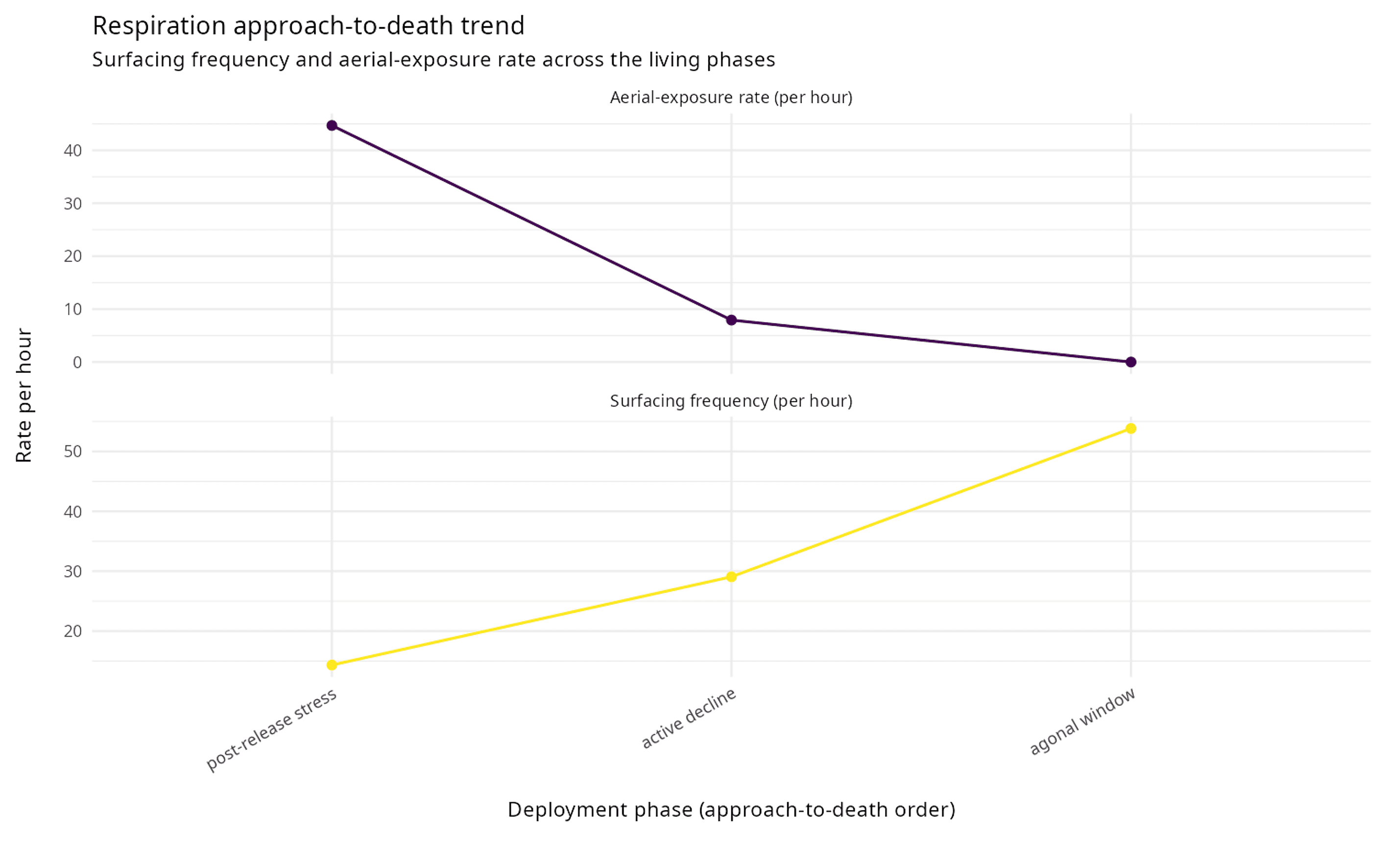
Increasing surface contacts accompanied by decreasing exposure of the transmitter to the air
The following graph illustrates two opposing trends across the three identified phases. The frequency of recorded surface contacts increases from approximately 14 per hour in the post-release phase to approximately 29 during the weakening phase and finally to approximately 54 in the section designated as the "agonal window". At the same time, the duration or frequency with which the transmitter attached to the animal actually emerges from the water and is exposed to the air decreases: from approximately 45, to approximately 8, down to nearly 0. This means that although the whale reaches the surface increasingly often, the transmitter emerges from the water less frequently or only very briefly.
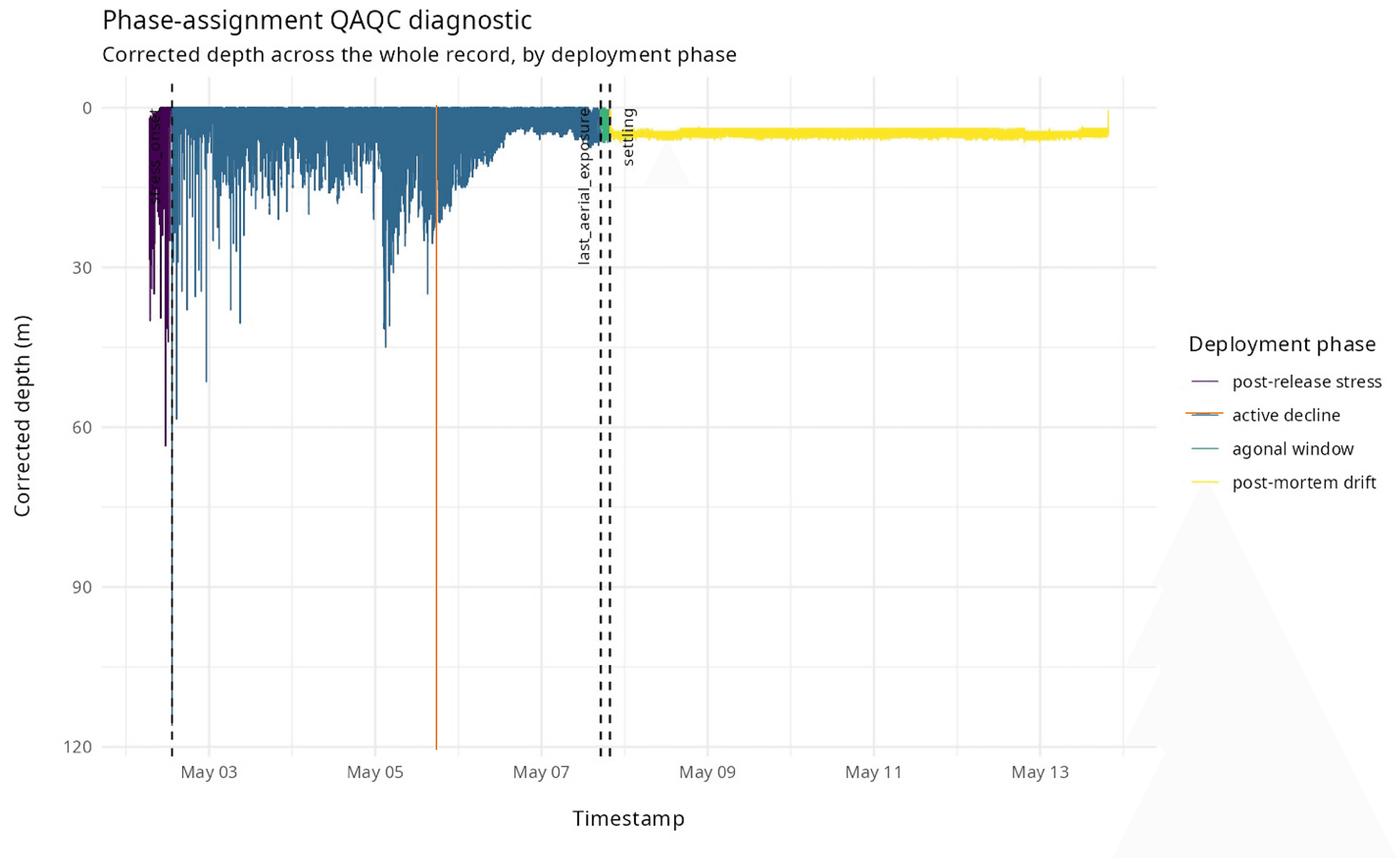
Phases of the diving profile of the humpback whale Timmy/Hope from 2 to 7 May 2026
The recorded diving profile can be divided into several chronologically distinct phases. Immediately after release, a stress phase is evident. A recovery or normalisation phase follows between 3 and 5 May. From 6 May, the dive profile shows a significant weakening of the humpback whale Timmy/Hope. The recorded dive depths decrease, and at the same time, the dive intervals shorten significantly. This development continues until the animal's death. The depth profile transitions into a virtually constant near-surface trajectory, characterized as "post-mortem drift".
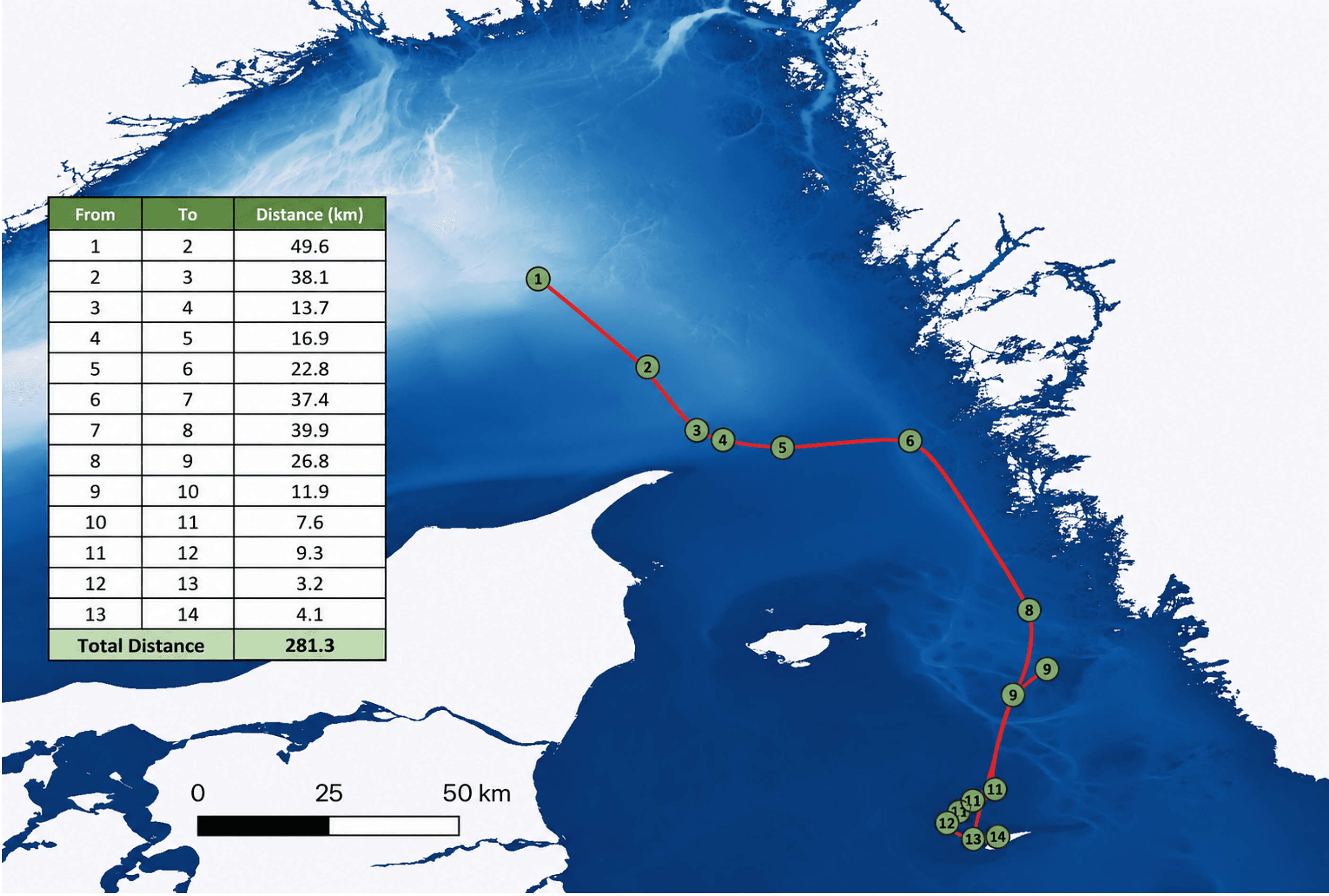
Validated GPS locations and reconstructed surface trajectory
The illustrations show the surface trajectory reconstructed from the validated GPS locations, taking water depth conditions into account. Additionally, all available GPS and ARGOS locations are shown. The validated GPS data yields a surface distance of approximately 210 kilometres, with about 8 kilometres deducted due to erroneous inland displacement. Including the less precise ARGOS locations results in a larger approximate surface distance. Both reconstructions solely capture the path between the registered surface positions; diving movements and distances travelled underwater are not included.
Example locations: 2 May 2026, 14:19:31 - 58°16'48.2"N 10°18'21.7"E; 3 May 2026, 14:59:46 - 57°49'05.6"N 10°57'15.5"E; 4 May 2026, 21:50:45 - 57°21'11.1"N 11°39'55.4"E.

For Part 2 of the analysis, it is planned to reconstruct the total actual distance travelled by the humpback whale, incorporating its diving movements. In addition, the movement data is to be cross-referenced with vessel traffic and the current conditions prevailing at the respective times to further contextualise the documented path spatially and chronologically.
Indication of a potentially harmful event in the immediate vicinity
The Danish Navy's diving service defused several aerial bombs dating from the Second World War in the Kalø Vig/Aarhus Bay area on 6 and 7 May 2026. According to the Navy, the ordnance had previously been located underwater using a drone. The bombs were detonated in a controlled manner at sea and on-site.


